In 2014, when I first visited these villages, our very thorough needs analysis indicated that 89% of the villagers practiced open defecation. In an area subject to flooding and torrential rains there was no hope of clean water and improved hygiene unless we curbed open defecation through the installation of latrines.
Our challenge was to integrate latrines into a holistic approach to water, sanitation and hygiene practices and have the villagers contribute to and embrace the improvements.
The plan involved supplying the villagers with a starter kit of materials the cost of which was covered by our private foundation funding. The villagers were required to not only pick up, and transport, but to also install it with the guidance of our on site project manager. In addition, they must build the floor, walls, roof and any other improvements they wish to make above grade. We budgeted for 100 latrines in the three initial villages but I believe the demand will increase significantly.
Our Tippy-Tap hand washing program is flourishing both at the schools and in family homes; and the wells are going in as fast as we can supply the rings. By summer “Water for Cambodia” will be installing 268 Bio-Sand filters and conducting extensive hygiene training both at a family and village level.
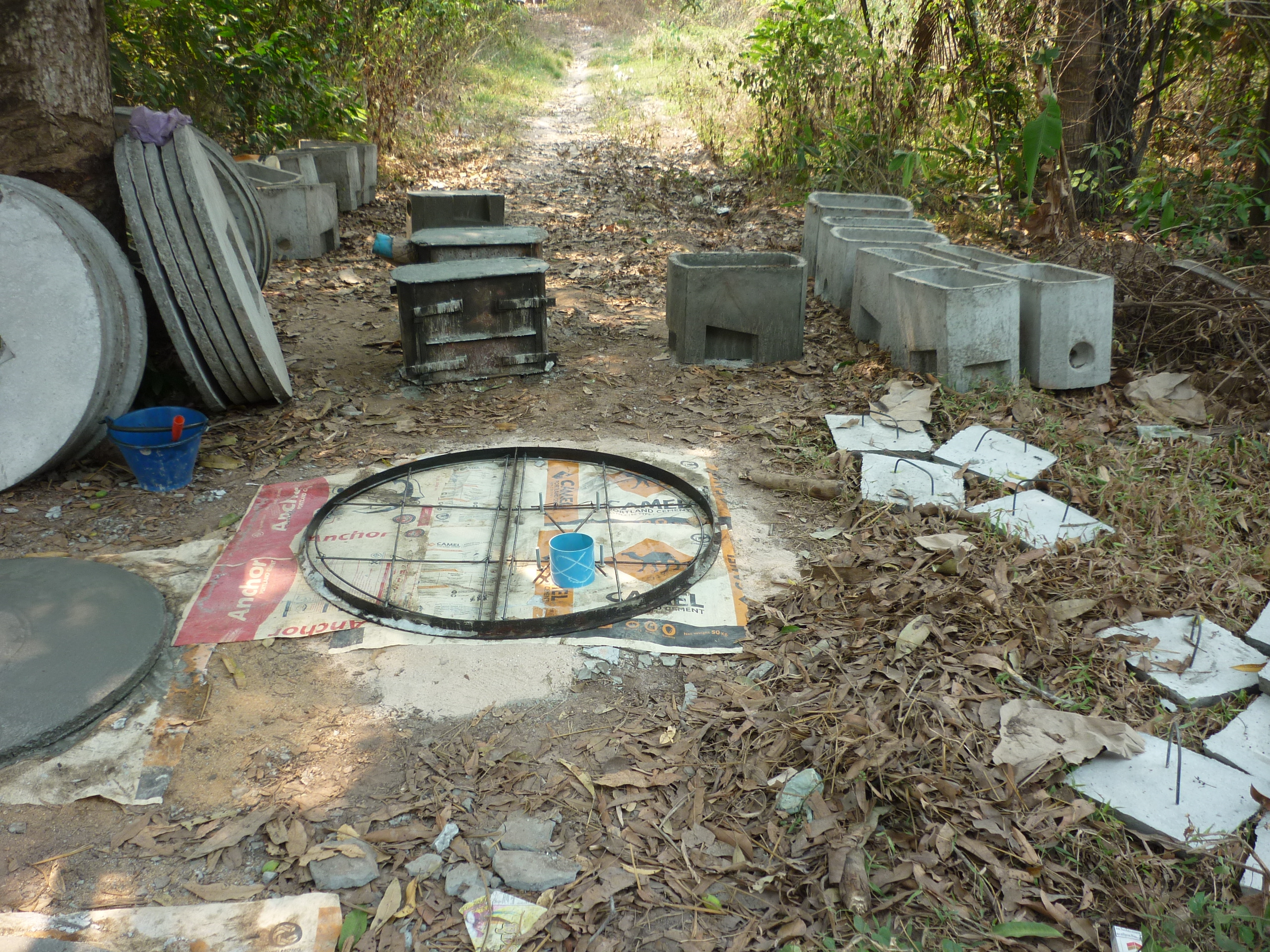 The foundations on which the porcelain squat toilets are mounted can be seen in the back. Cover plates for the rings are leaning on the tree. In the center the team is about to pour a cover plate. |
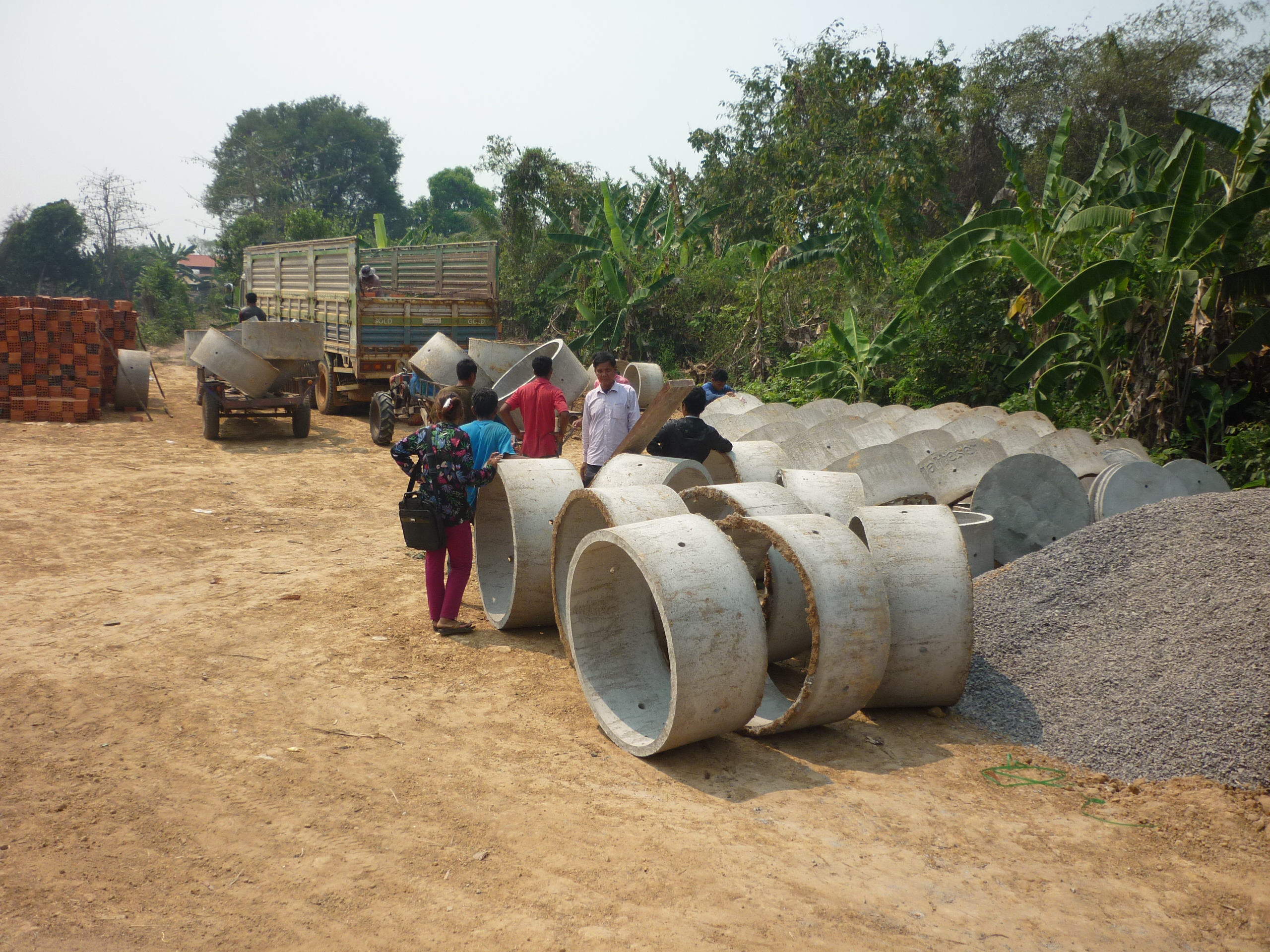 The starter kit includes four rings, two cover plates, PVC pipe, porcelain squat toilet and mounting block, brick, sand and cement. In this photo a villager is loaded up and ready to go. |
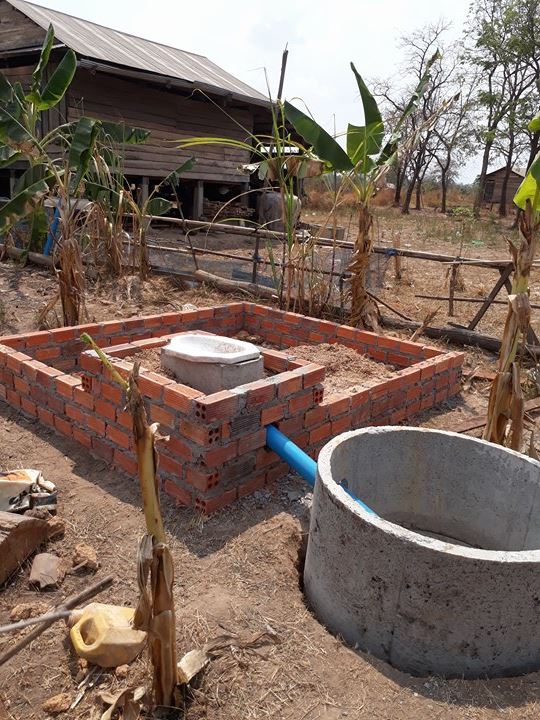 The homeowner has installed all the materials supplied by Water for Cambodia. Please note the latrine rings have been mounted to take into account inevitable flooding. |
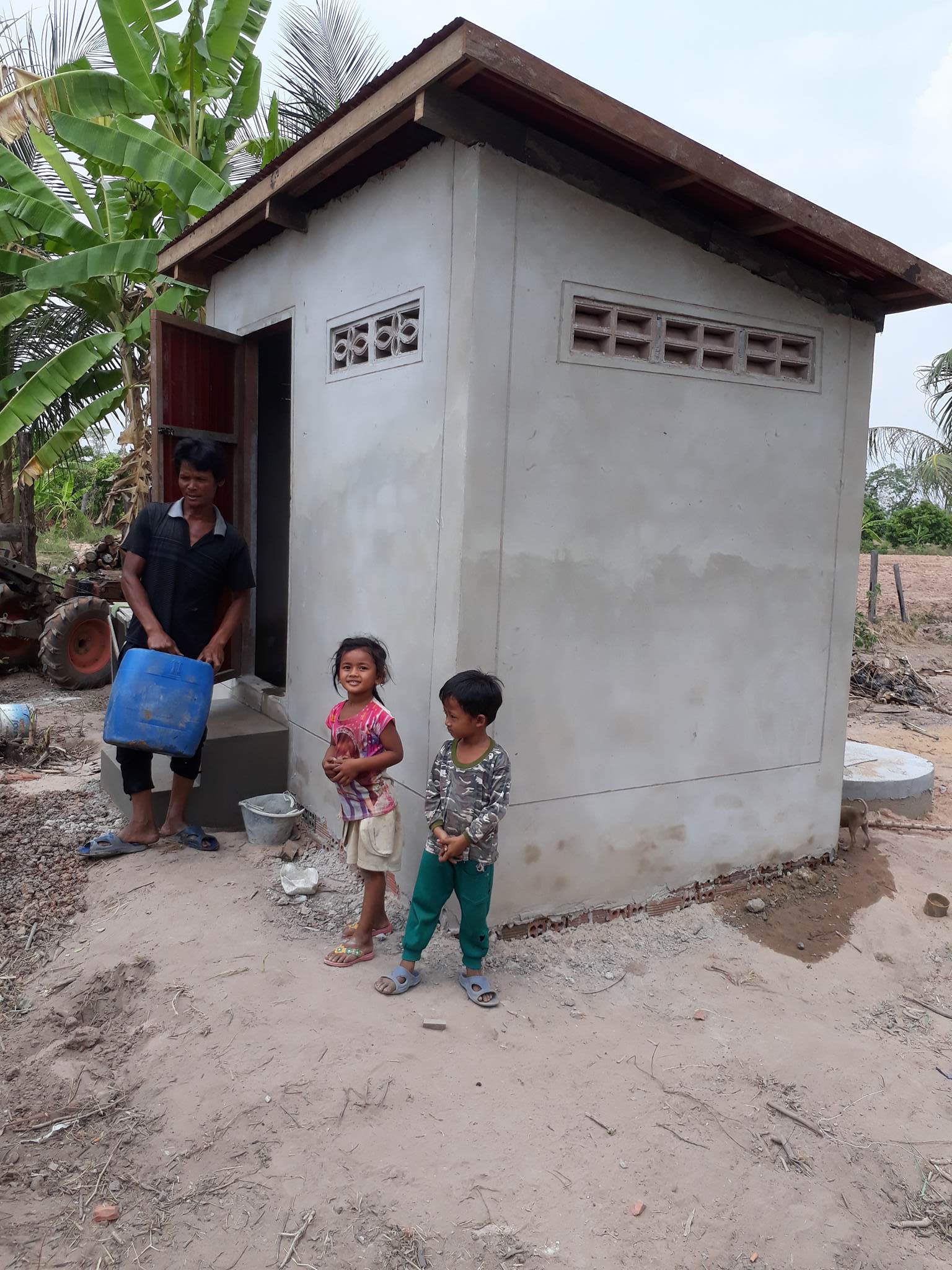 Less than a week after picking up their starter kit this family has completed their latrine. Most families build a tub inside to hold 30-40 gallons of water. This is used not only for flushing but also becomes a scoop shower. It works great and in the villages we all use latrines just like this one. The latrine becomes a haven for the ladies in particular as it is often the only place they have privacy |
These families will now have access to a neighborhood well, the kids are washing their hands, the latrine is in use and soon they will have a water filter. This will break the cycle of poverty exacerbated by waterborne illness.