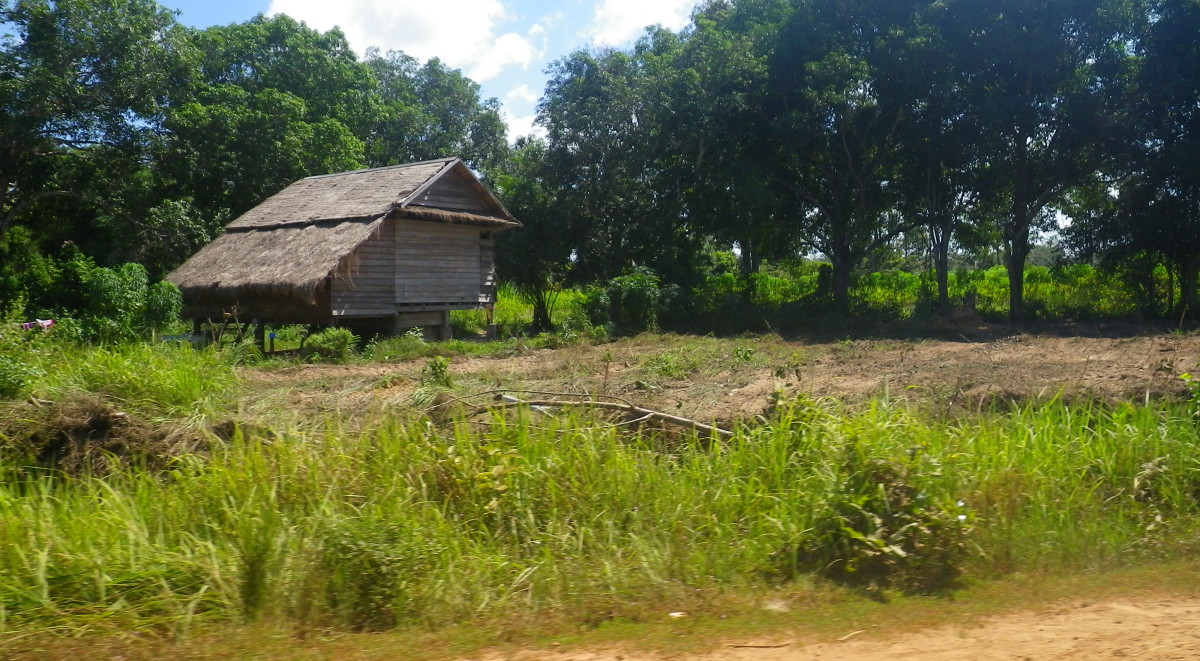
This day trip was undertaken because the previous day’s visit with the Commune Chief had left me feeling that I need to learn more. This was exciting!
So, at 8:20 AM, Seur and I left ‘Water for Cambodia’ on one motor scooter, knowing we had a long day ahead of us. Yesterday we logged 117 miles in the Toyota truck and today’s exploration of the more remote villages will bring us 25 miles farther into the rice paddies. By the end of the day we had logged 168.75 miles. Seur’s bum was hurting and mine was terminal due to a seam in the seat, which was drilling a hole in my butt. Our goal was to visit half dozen villages and stop and talk to the village chiefs and local leaders in at least a couple of the most critical villages.
This corner of Cambodia could be called ‘the forgotten villages’.
I’ll use the village of Kan Dol as our example:
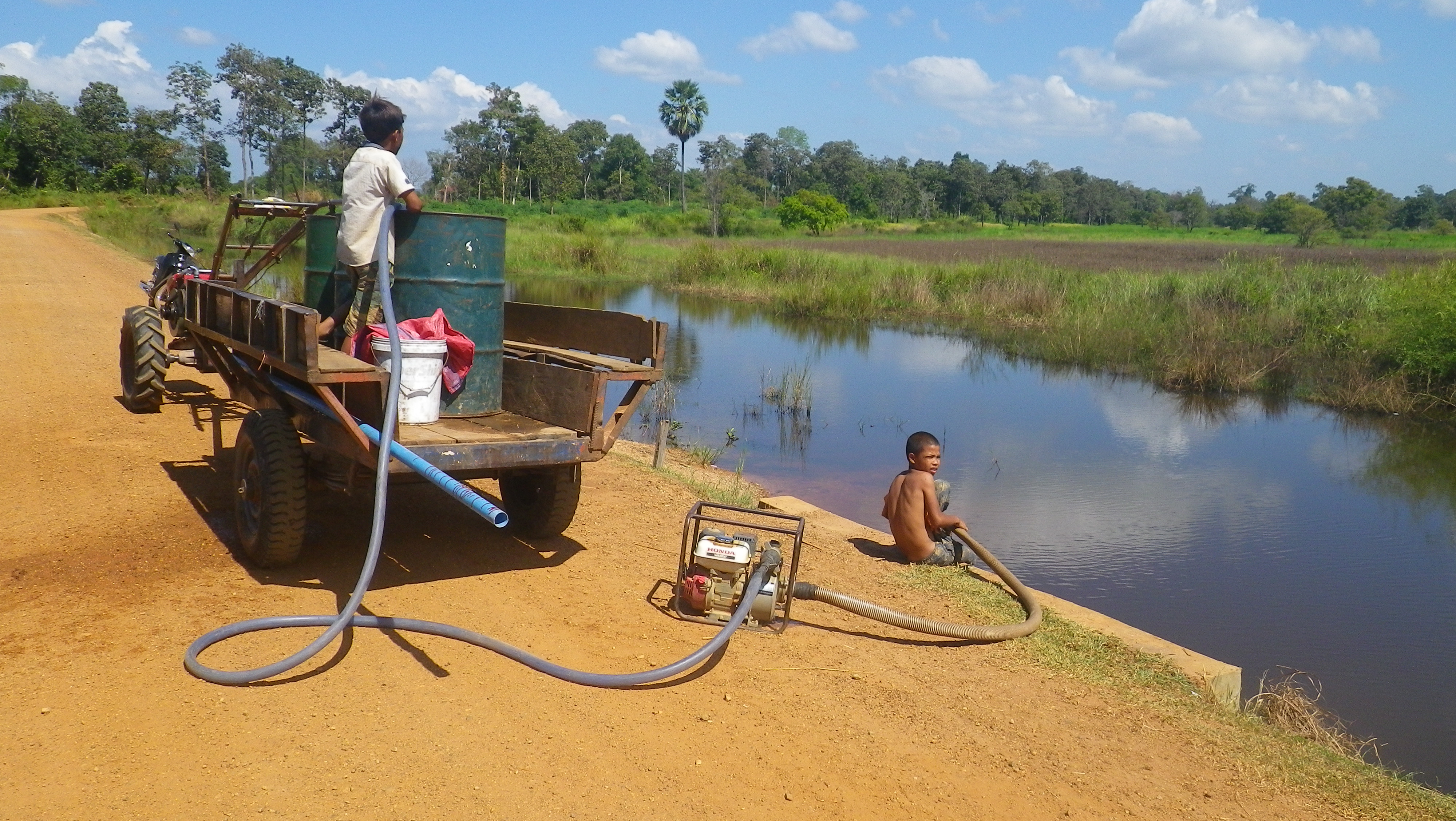
Two young entrepreneurs using dad’s tractor to deliver water to old and house bound villagers
Kan Dol has ninety-Six households with a total population of 399 residents, one-hundred and twenty-two of which are children under 18. The village which is spread over a large area has only two concrete toilets and one wooden toilet – basically, open holes with a concrete slab with a hole in it. When it fills up, they dig a new hole, reroute the new waste to the new pit and fill the old latrine.
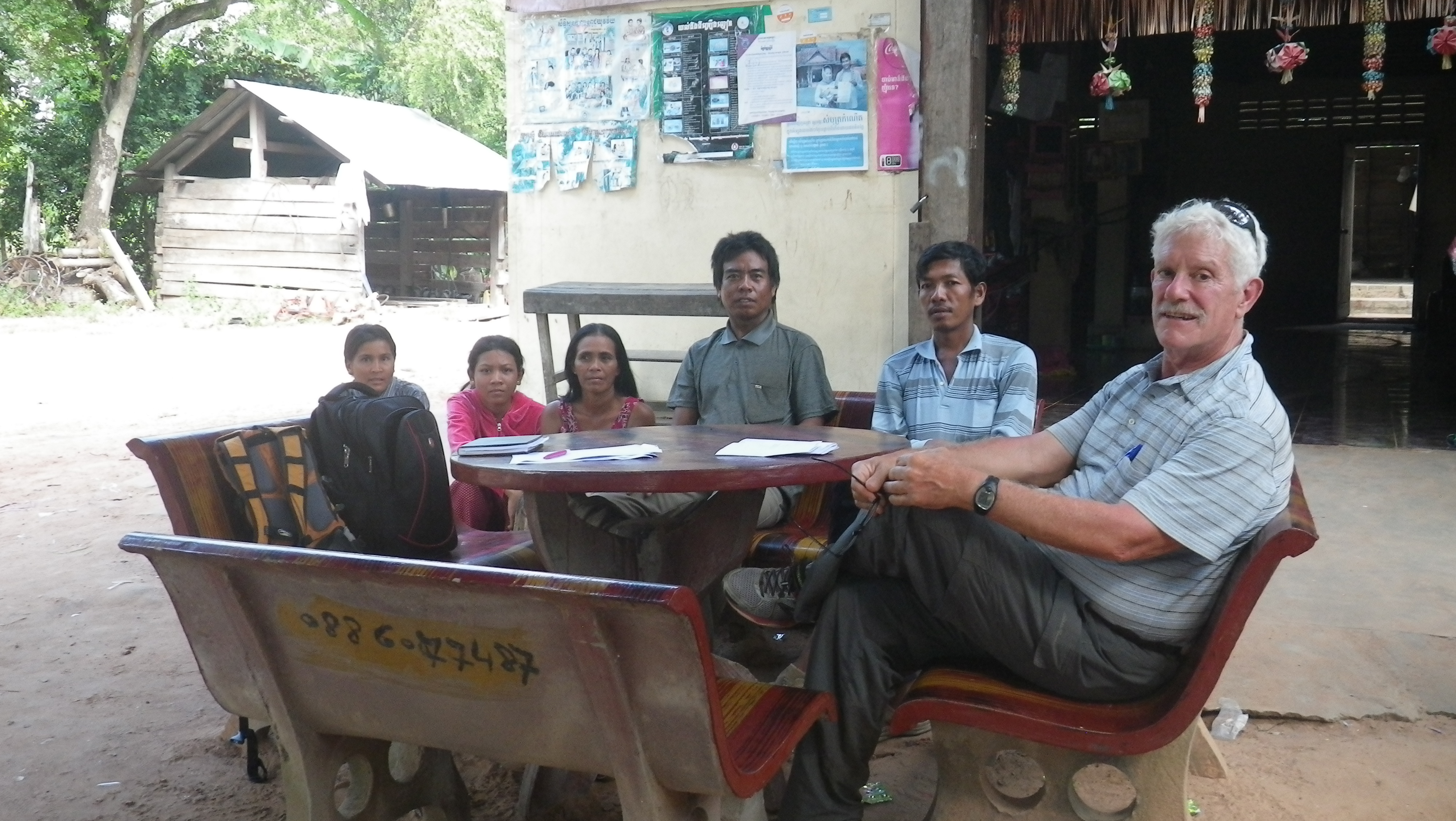
- Meeting with Village Chief and his family in
Kandal
There is but one water source and that is a one acre pond, the water level of which is a reflection of the overall groundwater table.
In other words, it is not spring or stream fed, but is merely a large hole in the ground dug by the villagers.
Kandal floods with up to 18” of water each rainy season so some of the fecal matter from 399 people defecating in the surrounding woodlands gets into the pond. The other villages in the area also get their water from ponds. These three villages, including Kan Dol, often run out of water during the dry season and then they travel by foot or bicycle to the large pond at the Pagoda a distance of ¾ of a mile, up to 3 miles. We visited the Pagoda, and that pond is under stress as all three villages use it during the latter part of the dry season.
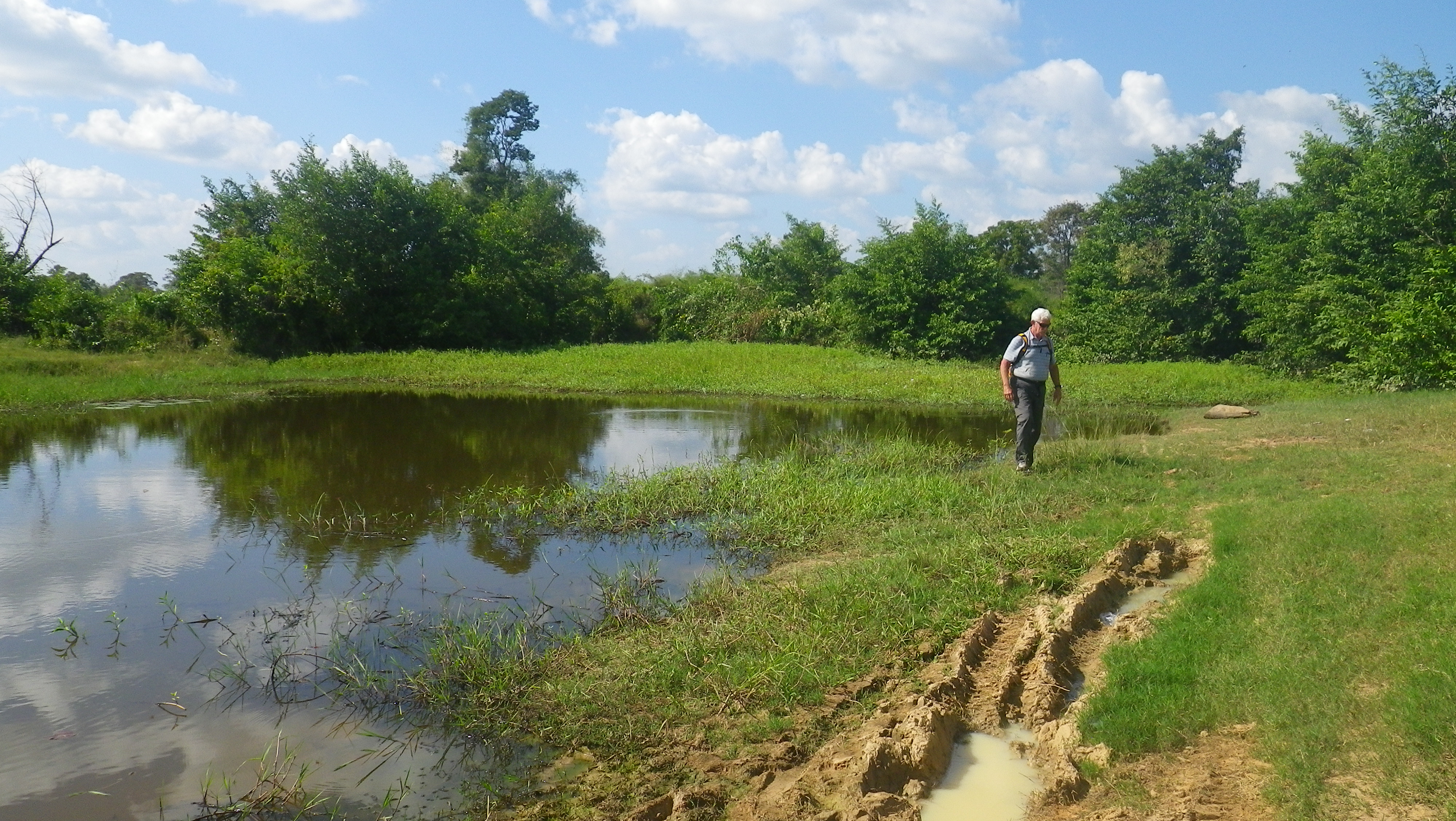
Inspecting Kandal’s ‘only’ water source. A dug pond that has gone dry seven of the last ten years
Kan Dol’s chief when asked what they do when the pond runs dry, which it has seven of the last ten years, says: ‘We dig deeper, chasing the water table as it recedes’.
The water from the pond needs to be boiled before use, putting a strain on the families’ budgets. The imperfect boiling of pond water and poor hygiene leads to rampant water-borne illness.
When I asked the village chief and other leaders what the biggest health problems were, they listed the following illnesses:
- Flu;
- Urinary tract infections;
- Diarrhea.
Another village chief listed urinary tract infections as number one and diarrhea as number two problem (no pun intended).
Interestingly, children between 10 and 12 years old are the most affected. As mentioned earlier we visited the Health Clinic, which is 25 miles from this area, to confirm the urinary track epidemic. She confirmed it was the major problem and we ascertained that the nurse is treating it with antibiotics.
We asked about:
- Households: 96
- Population: 399
- Toilets: 3
- Kids: 122
- Wells: 0
- Water Filters: 0
- ID#1: Highest Poverty Level: 22 families
- ID#2: Next to Highest Poverty Level: 10 families
- Handicapped: 1
- Nr. of Female HOH: 7
It is interesting to note that these poverty levels are well documented. Although anyone in this village far exceeds any poverty in the U.S., the classification of ID Poor#1 or ID Poor #2 designate that the household has no income, is starving, ill-housed and living in the worst of conditions.
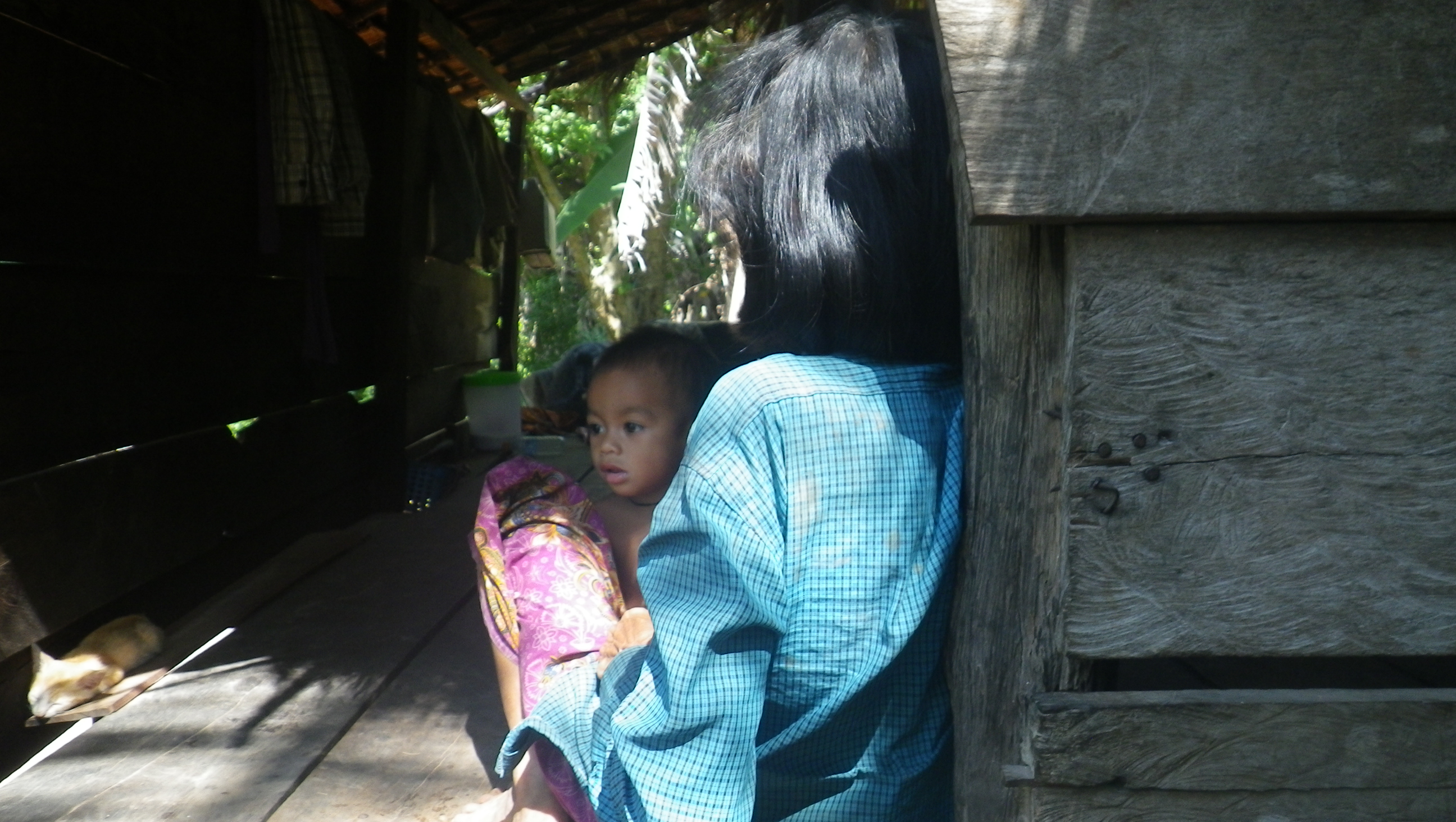
Heart breaking moment. We found this abandoned woman near starvation as was her baby (and cat). The Village Chief was notified and took immediate action. I did not photograph her face, out of respect
The village leaders were very open to self-help. For instance, if we would supply the dug well structures and toilet rings, they would organize the village to do all the digging, back-filling and placement and were willing to make a financial contribution.
They recommended strongly that toilets be put in to serve individual families and not be communal.
They did, however, agree – in fact, suggested – that three communal dug wells spread around the village would greatly alleviate not only the water shortages, but also the time spent traveling to and from the ponds.
They were very excited about Bio Sand Water Filters and were willing to conduct classes, inspections and regular maintenance to make a program work.
During our travels, we visited with a couple families asking about their water situation and got the same feedback.
The villages in this area have a primary school (and we saw another one under construction). If any of the kids wish to attend secondary school, they ride their bikes on Monday morning 20-25 miles on dirt roads (and trails) to the High School and sleep on the floor of the classroom until Friday, and they then ride their rickety old single-speed bikes 25 miles home Friday afternoon.
They might be some of the poorest people on earth, but they know the value of education.